
Basic care
Injections, dressings, post-hospital follow-up, blood pressure and temperature checks.
Flagship project
A frugal, self-sufficient community healthcare model designed for the outskirts and villages of Cameroon.
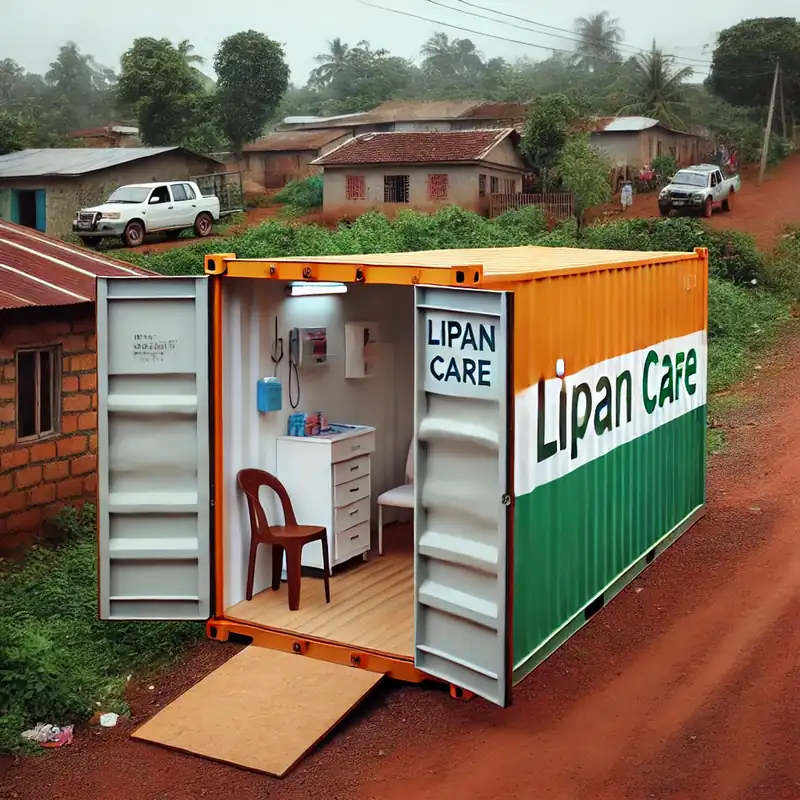 Concept visual
The challenge
Urbanisation pushes many households to the outskirts of Cameroonian cities, far from hospitals. For a wound, a fever or post-hospital follow-up, people often have to pay for a long journey before they even pay for care. So they wait — and small problems become serious ones.
Services
Injections, dressings, post-hospital follow-up, blood pressure and temperature checks.
Diarrhoea, pain, infections: early care and referral to hospital when needed.
An enclosed booth, a screen and a satellite link to see a GP or specialist.
At affordable prices, thanks to pharmaceutical partners.
Awareness on malaria, diabetes, vaccination and handwashing.
Nurses, care assistants, drivers and staff trained locally.
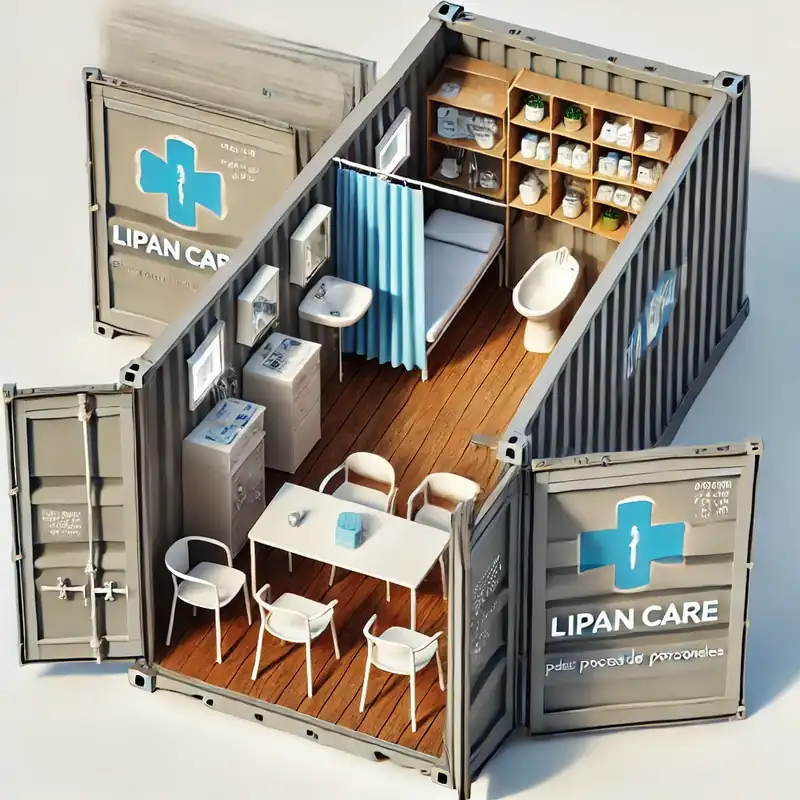 Concept visual
Format 1
A 20-foot container, repurposed and insulated, installed on low-cost land provided by the community or local authorities:
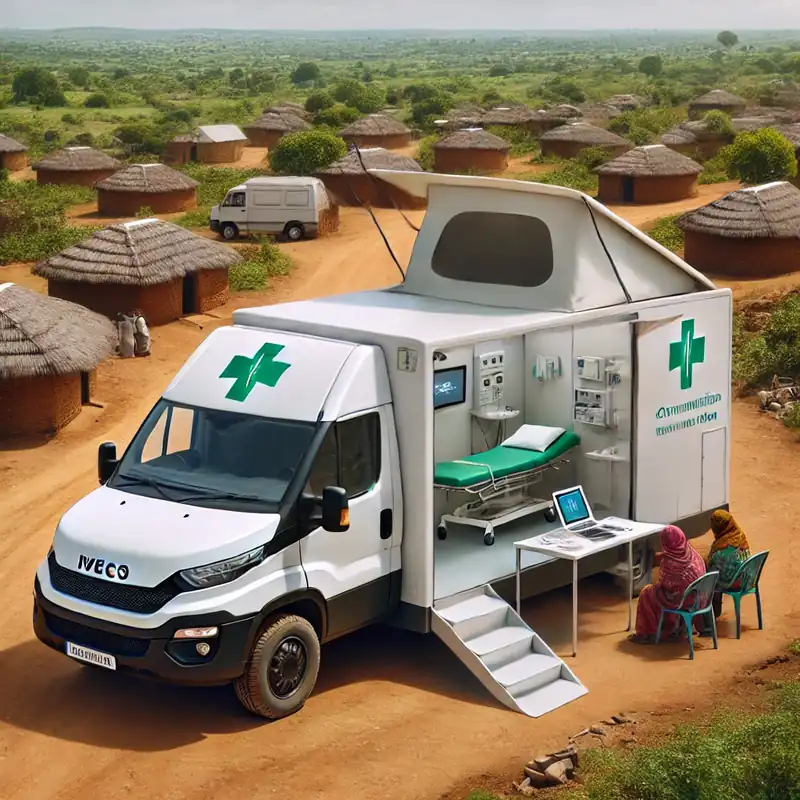 Concept visual
Format 2
Converted all-terrain vehicles serving several villages in rotation. A side awning, inspired by camper vans, creates a covered waiting area; built-in steps make access easier; inside: a teleconsultation booth, care area, sink and medical bed.
Eco-design
Solar panels for lighting, medical equipment and teleconsultation.
Collection and filtration for handwashing and care needs.
To reach a doctor even where there is no mobile coverage.
Decommissioned shipping containers instead of new concrete.
Business model
Each centre combines a symbolic contribution from patients, sale of medicines at minimal margin and partner support. Amounts below are estimates from our feasibility study.
| Container purchase | 800,000 FCFA (≈ €1,220) |
| Interior fit-out | ≈ 400,000 FCFA (≈ €610) |
| Consultation (patient contribution) | 1,000 to 3,000 FCFA |
| Teleconsultation | 5,000 to 7,000 FCFA |
| Team for 5 units (2 mobile + 3 fixed) | ≈ 34.4M FCFA / year (≈ €52,500) |
Roadmap
Strengthen the first health point and document its impact.
Add solar, rainwater and satellite teleconsultation.
Open 3 fixed points and launch 2 mobile units.
Share the model with other regions of Cameroon and beyond.
Funding a container, donating medicines, providing land, sponsoring a mobile unit with your brand visible.
Visuals on this page are concept illustrations of the project.